
The Wambooka takes a traditional-style darbouka drum and hydrates it, to surprising effect.
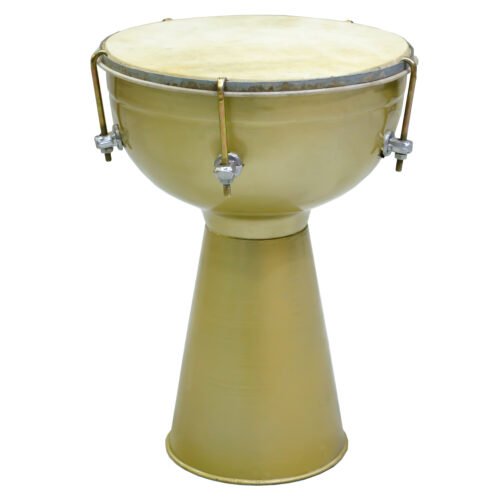
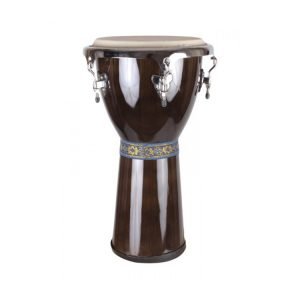
The darbuka (or doumbek) is a type of single-headed drum originally from North and East Africa but that’s spread across the world. The shell of the drum can be either wood or ceramic, or in modern versions of course, unbreakable polycarbonate.
Build
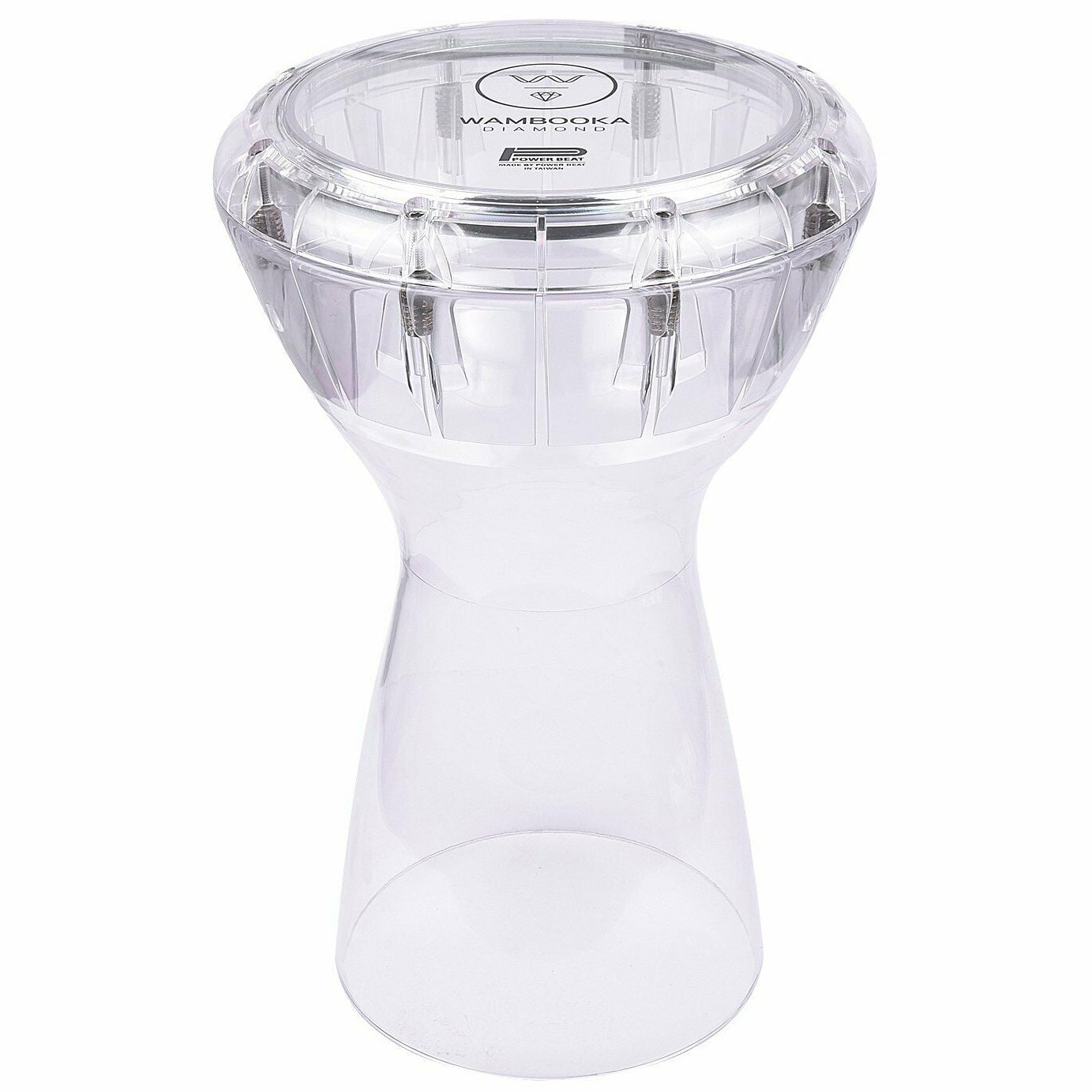
The Wambooka is constructed in the style of a traditional darbuka, with a flared base that tapers to a thin waist, which then curves out to form the bowl and the edges on which the head is placed. Most striking about the Wambooka is that it appears to be made from glass, but the whole shell of the instrument is created from it, including the hoop.
The body of the Wambooka is a one- piece solid body, and with the clear head and hoop it looks almost crystalline.
Hands On
The traditional way to play a darbouka is with it wedged under your arm, with your forearm resting longitudinally with the wrist floating above the edge of the batter, and the other arm free to play the head.
Different types of strike cause different notes – for example, striking the centre of the head with the fingers gives a bass tone and striking close to the edge of the head with the flat of the fingers gives a high- pitched tone, and muting either stroke gives another.
The hard material of the drum means that even light strokes sound clearly, reverberating out of the sound chamber quickly.
So far, so darbuka. Where the Wambooka differs, though, is in its unique ability to contain water.
Now, bear with us; it’s not often we advocate pouring water into test instruments, but add a pint or so to the open end of the Wambooka, and (making sure to keep the base tipped up beyond horizontal!) the water flows to the neck and head area.
The head is well-sealed so you don’t get any leaks, and at first the water sloshes around, making you wonder what you’re doing. That all changes when you strike the head though – the water damps part of the head and shell and as it moves around it causes eerie and unexpected sounds.
Deliberately wobble it when playing and all of a sudden you have a whole new vocabulary of sounds to play with. You can also play on the shell with your fingers, using the water to change the sound.
The Wambooka is a member of the darbuka, doumbek family. There are a couple of things that give the Wambooka unique qualities. First off the shell is a transparent synthetic material. This shell is designed to be able to be compressed slightly adding rhythmic pitch variations to the performance.
The Transparent synthetic head is hex wrenched tuned. The tuning machines used in the Wambooka will allow for a wide range of tuning options and once the player has found a desired pitch it will stay in tune. The nature of synthetic shells and heads is that they stay in tune and resonate in any environmental conditions.
The most unique quality of the Wambooka is that it has been designed to be played with water inside the shell. This opens the doors to a whole new range of tonal rhythms achieved by manipulating the fluid, shell and head during performance.
See and hear the diverse range of voicing the Wambooka can achieve by clicking the “watch/listen” tab above.
Synthetic shell and head with great tonal resonance
- Designed in Italy
- Made from a single piece of poly-carbonate
- Can be played wet or dry